 PlatePilot
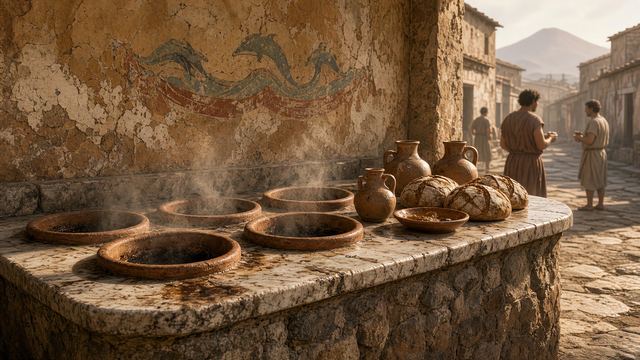
Lentils in the Counter Pots
HistoricalAmericanEat the PastA Bite of HistoryStory5 Ingredients or Less
Ingredients
- Narrative chapter
Instructions
- 1By the fourth hour after dawn the marble ledge was already warm. Steam rose from the deep earthenware jars set into the masonry counter like a row of open mouths. Inside them: a thick stew of lentils and cabbage soft enough for a laborer’s teeth; chickpeas swimming in oil and cumin; a cheaper mash of farro and greens that had been bubbling since the bakers down the block opened their shutters. The smell of fish sauce—garum, fermented anchovy liquor shipped in amphorae from the coast—cut through everything, sharp as metal and impossible to ignore.
- 2The woman who kept the shop did not own a grand kitchen. Few in Pompeii did. Most apartments were for sleeping and quarreling; real heat and real pots belonged to places like hers, a thermopolium open to the street, where a free man with a few asses in his purse could eat without lighting his own fire. She wiped the counter with a rag that never quite lost the stain of sauce. Above the jars, painted dolphins arched through a faded blue, a cheerful lie against the dust of carts and the bray of mules hauling wine up from the harbor.
- 3A fuller from the cloth works arrived first, knuckles raw from lye, and pointed without speaking. She ladled lentils into a cheap bowl, tore a wedge from a round loaf stamped with the bakery’s mark, and poured a splash of watered wine from a jug stoppered with clay. He ate standing, as almost everyone did. Tables were for inns and the rich. Here the city fed itself on its feet: porters, sailors between ships, a clerk with ink on his thumb, a pair of young women who laughed at a joke scrawled in charcoal on the doorframe—graffiti layered over graffiti, names and boasts and a note that the wine was good last Ides.
- 4Food in this town was a map of empire in miniature. Pepper and the better garum spoke of long sea lanes and money. Ordinary citizens stretched flavor with herbs from market gardens, onions, and the salty crust left when fish sauce met hot oil. Meat was not the daily anchor; it appeared on festival days or when a neighbor slaughtered and sold shares. What kept bellies quiet were grains, pulses, olives, cheese tough enough to travel, and bread—always bread—carried still hot in cloth from ovens that never seemed to cool. Preservation was salt, smoke, vinegar, and the sealed amphora. Spoilage was a fact you smelled before you saw it, and you did not serve what the flies had claimed.
- 5By midday the jars had sunk an inch. She topped the chickpeas with a thread of oil so green it tasted of crushed leaves, and crushed a little more cumin between stones worn smooth by years of the same motion. A boy ran past with a tray of honey cakes for a house farther up the block; sweetness was a private celebration, not her trade. Her business was heat, fullness, and speed. A customer who lingered too long blocked the next coin.
- 6Across the bay, Vesuvius wore its familiar haze. No one in the shop gave the mountain a speech. Mountains stood; people ate. The woman skimmed a skin of froth from the farro pot and tasted it on the edge of the spoon—salt, grain, the ghost of last night’s bones. Good enough. She set fresh bowls on the ledge where the marble was dark with old spills, a ledger of every noon that had come before this one.
- 7When the next man leaned in, she did not ask his name. She asked with her ladle, and the answer was always the same grammar of hunger: lentils, bread, a mouthful of wine cut with water, the burn of garum blooming at the back of the throat. Somewhere behind the shutters a clay lamp waited for evening. Somewhere a bakery’s ash banked for the next rise. On the counter the pots breathed, and Pompeii—loud, greedy, ordinary—ate while the food was hot.