 PlatePilot
Rice Bowls on the Summit Grade
HistoricalAmericanEat the PastA Bite of HistoryStory5 Ingredients or Less
Ingredients
- Narrative chapter
Instructions
- 1By late 1867 the Sierra did not so much host a railroad as try to swallow one. Snow buried the grade as fast as powder and pick could open it. Along the Central Pacific’s mountain division, granite and timberline and the long dark of tunnel headings ruled the calendar. In the company camps the familiar American ration held: salt pork, hard beans, flour, and coffee boiled until it could stain a tin cup. Men ate to stay upright.
- 2A short walk off the main track, another smoke lifted into the cold.
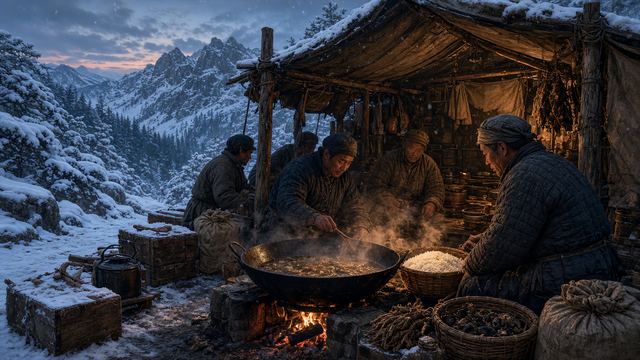
- 3The cook’s shed was little more than plank and canvas banked with snow, but the iron wok over the fire had already changed the air. Rice—whole grains, not ship’s sweepings—simmered toward softness. Nearby, dried oysters and cuttlefish softened in warm water; slabs of cured pork belly waited beside ginger root and a crock of fermented bean seasoning carried up from Sacramento. Crates stenciled in Chinese characters told a quiet story the pay car never printed: merchants in San Francisco’s and Sacramento’s Chinese quarters had built a supply line as deliberate as the rails themselves. Laborers paid for much of their own keep out of wages, and they spent those wages on food that remembered home.
- 4Men came in stiff from the heading—dust of blasted rock in their hair, gloves stiff with ice. Thousands of Chinese workers now formed the backbone of the Central Pacific’s mountain force, grading, hauling, and boring through the summit country while the rest of the line argued with weather and time. They had learned the mountain’s tempers: how quickly a clear afternoon turned to white-out, how a basket of rubble could freeze to the ground if left too long. What they refused to learn was that exhaustion had to taste of nothing.
- 5The cook worked without flourish. Scallions hit hot oil and sweetened the shed. Soaked mushrooms went in next, releasing a dark broth that smelled of forest floors far from this granite. Shredded cabbage and whatever root vegetables the last mule train had not ruined followed. Tea steeped in a big kettle—leaves, not the scorched grounds of the neighboring camp. Men who drank boiled tea instead of creek water sickened less often; that fact traveled quietly from gang to gang, as practical as any tool.
- 6Supper was not a feast in any banquet sense. It was a claim. Bowls passed hand to hand. Rice took the center; the savory topping—oyster, pork, cabbage, the deep salt of fermented soybean—made the edges worth chasing. Chopsticks clicked against cheap ceramic. Someone laughed at a joke too quick for English. Outside, the Sierra wind tried the guy-ropes; inside, fat shone on the wok’s rim and steam softened faces that had been clenched since dawn.
- 7Company men sometimes stared. The Chinese camps, they reported, smelled of strange sauces and fish dried to leather. What those reports underplayed was outcome: fewer hollow cheeks, fewer gums gone wrong from months of pork and flour alone, a pace of work that kept spikes ringing when storms hammered the calendar. Food was not decoration here. It was logistics, medicine, and memory packed in rice sacks and tea chests.
- 8When the bowls emptied, men rinsed them with a splash of hot water and drank that too. Nothing useful was wasted at timberline. The cook banked the fire for morning congee—rice broken down further, ginger floating, a thread of leftover broth to remind the stomach what warmth was. Tomorrow would be another length of grade, another charge of powder, another argument with stone. Tonight the meal had done what iron and schedule could not: it had made a high, hostile place briefly edible.
- 9On the crate lid, a little chili oil still glistened where a thumb had wiped the rim. The mountain could keep its wind. The crews had rice, salt, and a wok that answered both.