 PlatePilot
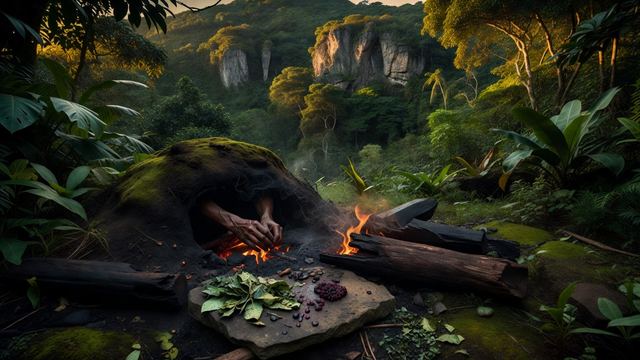
Smoke Under Pimento Leaves
HistoricalEat the PastA Bite of HistoryStory5 Ingredients or LessAmerican
Ingredients
- Narrative chapter
Instructions
- 1By late afternoon the Cockpit Country held its heat like a sealed pot. Limestone sinks and cockpits dropped away under a tangle of mahoe and thorn, and the air above the hidden clearing smelled first of crushed leaves, then of fat beginning to dream over coals.
- 2Aja tested the pit with the back of her wrist. Too fierce and the hog would char before the smoke cured the deep muscle; too shy and the meat would sour in the night damp. She had grown up on the north-side estates where salt pork arrived in barrels from Cork and Boston—gray, hard, and counted by the overseer. Here, above the cane line, meat answered to wood and patience instead of a ledger.
- 3The barrow hog had been taken at dawn in a wallow near a sinkhole, wild and lean from rooting. The men had scalded and scraped it on a frame of green sticks—the old Taino way of raising meat above a low fire, a method the island’s first peoples had used long before Spanish ships named the frame barbacoa. What the mountains added was African knowledge of paste and pepper, carried in memory across the Middle Passage and remade with whatever the ridges grew.
- 4Aja’s hands were dark to the wrist with the rub. She crushed dried pimento berries—allspice, the Spaniards had called it, because one berry seemed to hold clove, cinnamon, and nutmeg at once—against coarse salt on a flat stone. Bird peppers, small and vicious, were pounded with scallion, thyme pulled from a shaded bank, a knuckle of ginger, and a splash of sour orange. Where estate cooks guarded imported black pepper like coin, the Maroons worked with what rooted free: pimento trees that scented whole valleys when the breeze turned, and peppers that thrived in poor soil.
- 5She worked the paste into every score of the meat, under the skin along the shoulder, into the cavity. In the lowlands, planters’ tables boasted pickled oysters and wheat flour; in the cockpits, wealth was a hog that would feed three families and still leave strips to hang in further smoke. Heat was the enemy. Without enough salt—and salt still had to be stolen, traded, or boiled from coastal pans—smoke and acid and chile were the difference between a feast and a bellyful of trouble two days later.
- 6Boys dragged armfuls of pimento wood. The green sticks went down as a rack; the seasoned branches fed a fire burned down to a thoughtful glow. Leaves layered over the hog, then sheets of broad trash, then earth patted firm until only a breath of fragrant smoke found the air. That was the craft: not a blaze for show, but a sealed oven that would talk all night in whispers of berry oil and pork fat.
- 7While the pit worked, the camp ate sparingly from what was already safe—roasted plantain, a soup of callaloo and salted fish flakes, cassava bread toasted on a griddle stone. Children licked ginger from their thumbs. An older man mended a calabash bowl with resin and told, half in Coromantee cadence and half in the island’s creole, how the first runaways had learned which woods flavored and which woods only poisoned the meat. Nobody mocked the lesson. Food was intelligence. Food was borders you could taste.
- 8Beyond the ridges, British patrols still spoke of “rebellious Negroes” and drew maps that pretended the interior was empty. Treaties would come, and break, and come again; captains would argue over land and return of newcomers. But tonight the argument belonged to the pit. When the earth was finally opened, steam rose sweet and sharp, allspice oil shining on dark bark. The hog’s skin had gone lacquer-brown. Fat hissed where knives found it. People came with leaves for plates, with fingers ready, with the particular silence that falls when hunger knows it is to be answered honestly.
- 9Aja cut for the eldest first, then for the hunters, then for the children who had kept the leaf pile steady. The meat pulled in long, peppered strands. It tasted of the mountain’s own trees—clove-warm, citrus-bright, smoke deep enough to keep until morning. Someone laughed. Someone passed a calabash of cool spring water. Above them the pimento leaves shifted, and the smell of the island’s freest kitchens went up to meet the stars.